Cesspool Locate
Cesspool Locate – Makawao Plantation Home
Under Hawaiʻi law, all cesspools must be upgraded or replaced by 2050, making early identification an important first step in planning and compliance
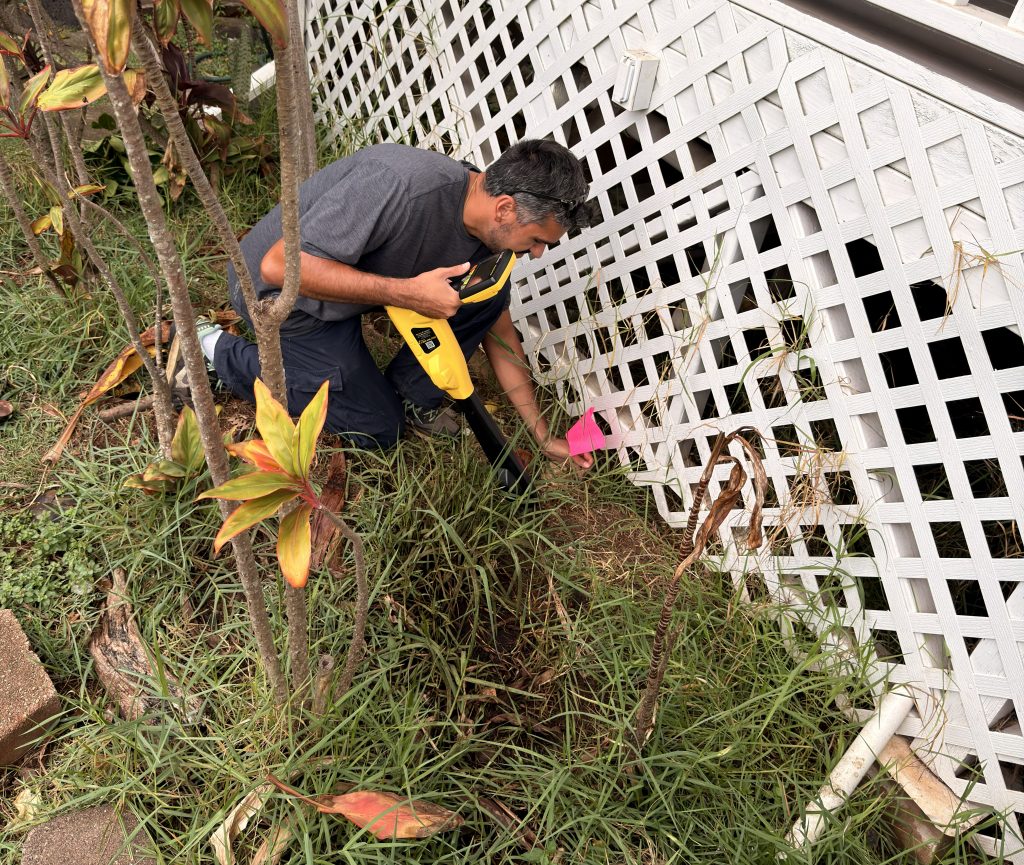
At this Makawao plantation-style home built in the 1930s, the location of the cesspool was unknown. The previous owner was unable to disclose its position during the sale, leaving the new homeowner with unanswered questions and real concerns—especially about how long it had been since the system was last serviced.
We were brought in to non-invasively locate the cesspool without digging or removing a toilet to trace the line. Using advanced locating methods, we identified the cesspool’s exact location, including its size and depth. A ferrous metal detector was then used to pinpoint and expose the cleanout cap, which was marked with embedded rebar.
Get ahead of the 2050 deadline—locate your cesspool now.
Found it ✔️
For older homes, this information is essential. Most cesspools should be pumped every 3–5 years, depending on household use. When maintenance is delayed, the risk of leaks, ground saturation, odors, and structural failure increases significantly. In some cases, neglected systems can collapse or cause damage that far exceeds the cost of routine servicing. With Hawaiʻi requiring all cesspools to be replaced by 2050, understanding your system’s location and condition now allows homeowners to plan ahead rather than react later.
By locating the cesspool system early, the homeowner can now schedule proper servicing, evaluate the condition of the cesspool, and avoid unexpected issues in the future. For anyone buying, selling, or maintaining an older property, knowing what’s underground is an essential part of protecting both the home and the land.
Find your cesspool now and get ahead of the 2050 requirement.